You know your bathroom isn’t “dirty,” but it does look tired at some point. You cleaned the tiles, wiped down the mirror, and even changed the towels. But the gray, stained grout that runs along every line of the floor and walls is what makes the whole thing look bad. It catches the light in the worst way, and all of a sudden your “clean” bathroom looks like a before picture in a renovation ad.
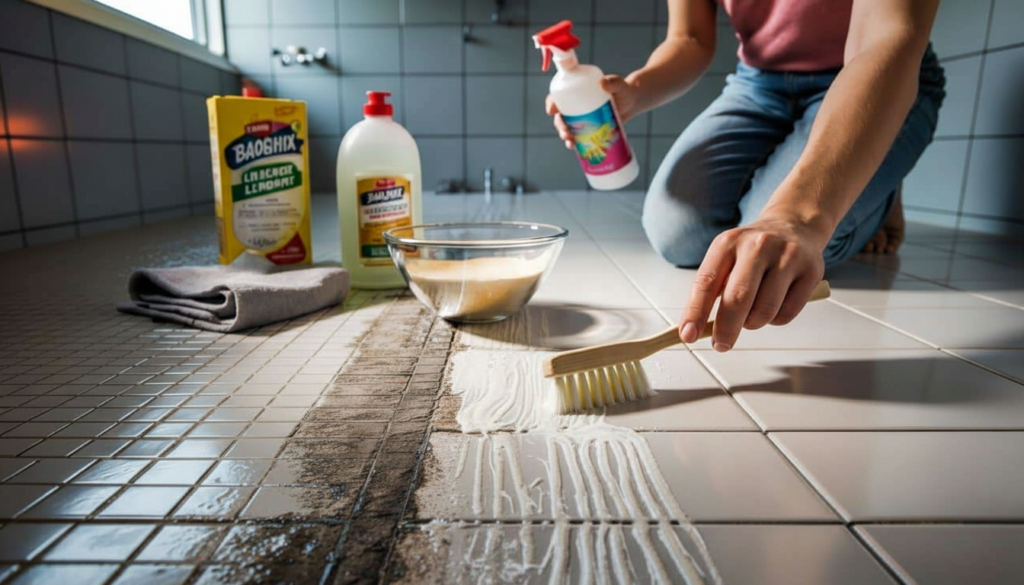
On a rainy Sunday, I saw a friend kneel on the tiles and mix three common ingredients in a bowl. Then, without any fuss, they spread the mix into the grout lines. No gloves, no mask, and no smell of chemicals. We cleaned everything up fifteen minutes later.
It felt like trick photography because the difference was so clear.

And the best part is that the magic was always in her kitchen cupboard.
Why grout always looks dirty, even after you clean it
Grout is like the white shoes in your bathroom. You promise to keep it in great shape the day you put it in. Then life happens: steam, soap, toothpaste stains, muddy footprints, and spilled shampoo. The tiles stay shiny, but the grout quietly soaks up everything.
You don’t really notice it every day. One morning, you look down and see that the neat cream lines have become patchy gray, with yellow near the toilet and almost black in the corners of the shower. You grab your usual cleaner, spray it on, scrub it, and rinse it off. Nothing. The grout still looks worn out.
A reader told me about the time she lost it. She was hosting her in-laws and had just done a frantic “everything must look perfect” clean. Her mother-in-law walked into the bathroom and said, half-kindly, “Old grout is hard to keep clean, isn’t it?”
They weren’t being rude. It hurt anyway.
That night she fell down a rabbit hole of tips and tricks for cleaning grout, like bleach gels, steamers, special brushes, and pastes that had to sit for hours. Every answer promised the world. Most of the gear she needed she didn’t have, and she didn’t have the time to wait. She wanted something that was cheap, quick, and safe to use in a room where her kids brush their teeth without shoes on.
Grout is like a hard sponge between your tiles because it has holes in it. It soaks up oils from your skin, soap scum, moisture, and bits of limescale from hard water. A regular floor cleaner just slides over the surface. Bleach can make things whiter, but it can also break down the grout over time, making it chalky and crumbly.
This three-ingredient trick works so well because of this. One part cuts grease, another lifts stains, and the last one disinfects and brightens. They don’t just sit on top of the dirt; they pull it out. *That’s what makes the “wow” moment happen.
The three-ingredient mix that brings old grout back to life
My friend swears by this simple recipe: in a small bowl, mix three tablespoons of baking soda, one tablespoon of white vinegar, and one tablespoon of dish soap. Gently stir. It will foam for a bit, then become a creamy paste with some bubbles. The texture should be thick enough to stick to vertical grout lines and not be too runny.
Use a small scrubbing brush or an old toothbrush. Line by line, put the paste right on the grout. Don’t hurry. This is oddly satisfying. Give the mix about 10 to 15 minutes to sit. Then scrub it gently and wipe it down with a wet cloth. Wash with warm water and look at the lines.

A lot of people make mistakes at this point. They either soak the floor in water, use half a bottle of vinegar, or attack the grout like they’re sanding a boat. You don’t need that. The mix is doing the hard work; all you need to do is apply light pressure.
To be honest, no one really does this every day. Once every few months is a win. If your grout is really old or has a lot of stains, the first session might not make it snow-white, but it almost always makes it a little lighter. That usually makes the whole room feel fresher, like you secretly changed the tiles while you were sleeping.
Léa, 39, who rents a small apartment with a very 2003 bathroom, says, “I stopped buying special grout cleaners after I tried the baking soda-vinegar-dish soap mix.” “The first time I used it, the lines in my shower went from beige-gray to almost the same color as they were before. I sent my sister some pictures. She thought I had the grout redone.
- Baking soda is a mild abrasive that can get rid of stains without scratching tiles.
- White vinegar breaks down mineral deposits and soap scum and gets rid of moldy smells.
- Dish soap cuts through grease and body oils and helps the mix spread out evenly.
- Old toothbrush fits perfectly into tight grout lines and gives you targeted scrubbing power.
- Microfiber cloth: wipes away residue without leaving streaks on tiles.
Having grout that doesn’t make you crazy
Once you’ve seen boring grout wake up in fifteen minutes, things change. You stop thinking of your bathroom as “old and doomed” and start to see how a small, focused effort can make a difference.
The key is to not let things go back to chaos. It doesn’t mean becoming the person who cleans grout for fun on weeknights. It means getting the dirt before it gets worse. A quick pass with the same paste on the shower floor, around the sink, and the strip in front of the toilet every couple of months is usually enough. You spend ten minutes and get yourself another season of “my tiles still look good.”
There is one more side effect. People who try this once often tell others about it. A sister, a neighbor, or that friend who has a “hopeless” rental kitchen. And at some point between trading banana bread and grout paste recipes, the conversation shifts. Home care stops being about feeling bad and starts being about small, real wins.
You begin to see the room in a new way. You might see the grout before a guest does, but now you know how to deal with it. The tiles don’t have to be perfect. They just need to stop yelling, “I gave up years ago.”
We’ve all been there: the moment when a small problem around the house makes you feel like your life is out of control. Grout is a small thing, but it has a lot of weight.
You’re not just cleaning a floor when you bend down with a bowl of three simple things and quietly flip the script in fifteen minutes. You’re taking back a little space from the slow creep of “that’s just how it is now.” And in between the baking soda and the toothbrush, you remember that some problems are really easy to fix.
| Key point | Detail | Value for the reader |
|---|---|---|
| 3-ingredient recipe | Baking soda, white vinegar, dish soap in simple proportions | Easy, low-cost mix you can make from pantry staples |
| 15-minute action | Apply, wait, light scrub, wipe and rinse | Visible results without investing a whole afternoon |
| Gentle but effective | Mild abrasives and natural acids instead of harsh bleach | Cleaner grout without damaging tiles or irritating lungs |
Questions and Answers:
Question 1: Can I use this mix on colored grout?
Yes, most colored grout can handle this mix well because the baking soda is mild and the vinegar is watered down by the paste. If you’re worried about fading, try it out on a small, hidden area first, especially if the grout is very dark or has just been dyed.
Question 2: Will this get rid of mold in the grout?
Response 2
It helps break up mold on the surface and kill some spores, especially when used with scrubbing. You may need to clean the area several times or use a specific anti-mold product after cleaning if the black mold is very stubborn and deeply embedded.
Question 3: How often should I clean my grout this way?
Answer 3
Every two to three months is usually enough for a normal family bathroom. You might need to quickly clean visible spots on showers that get a lot of use or grout that is light in color a little more often.
Question 4: Can I keep the paste for later?
4. Answer
Not really. When you mix baking soda and vinegar, they start to react right away. This makes the paste lose its fizzing power over time. It’s best to make small amounts and use them right away.
Question 5: Is this safe to use on tiles made of natural stone?
Answer 5
Vinegar and other acidic products can damage natural stone like marble or limestone. If you have stone tiles, don’t use vinegar. Instead, mix baking soda with dish soap and a little water, then rinse well.