In Europe and North America, homeowners are waking up to windows that are fogged up, paint that is peeling, and mold that is spreading. But long before smart thermostats and dehumidifiers, people used a small, almost forgotten trick to keep the glass dry without anyone noticing.
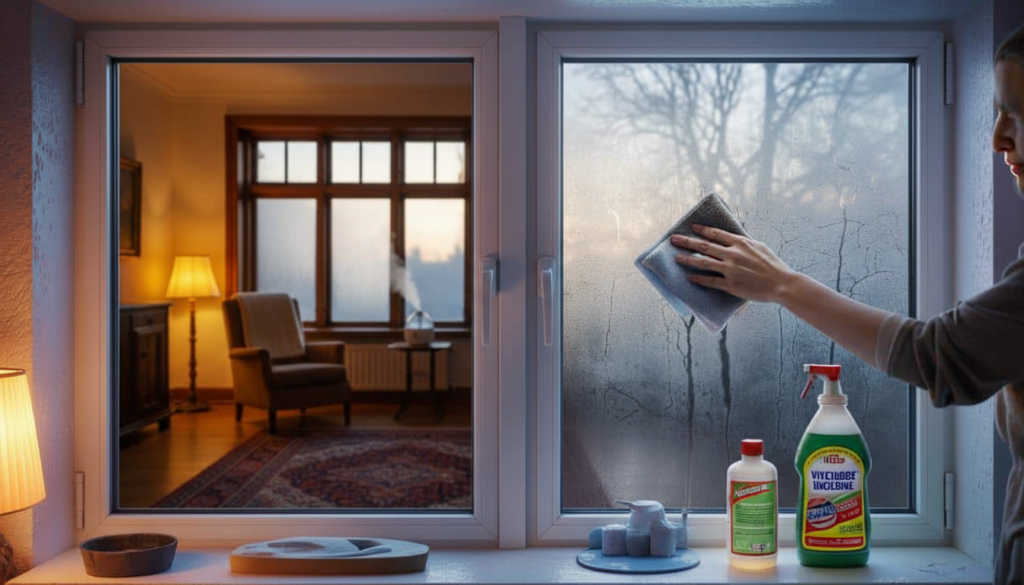
Why windows in the winter become wet walls
When it gets really cold outside, your windows are some of the coldest places in your house. When warm, moist air from showers, cooking, and breathing hits this cold glass, it cools down quickly. When it gets to what physicists call the dew point, the water vapor in it turns into liquid.That’s the foggy film you see when you wake up. It looks safe and even cozy, but the truth is that it’s not. Droplets come together, slide toward the frame, and soak into the wood, sealant, and plaster. Over time, this repeated wetting can warp frames, damage paint, and feed mold spores.
Condensation in the morning is not only unsightly
Wiping the glass with a towel every day only fixes the problem temporarily. The water still forms, the air stays humid, and the cycle goes on. A lot of people turn up the heat to try to “burn off” the damp. That usually means more money spent and no permanent solution.

The anti-fog trick that you forgot about in your cupboard
People used to change the way water acted on the glass itself, which was a surprisingly simple method. Instead of letting moisture stick and bead, they put on a thin film that made the surface less inviting for droplets.
The same idea works today with two very common things: washing-up liquid and vegetable glycerine. Both change the surface tension, which is what surfactants do. That makes a big difference on glass.
A thin layer of glycerine or dish soap can stop mist from forming and keep your windows clear for days.
The moisture doesn’t form tiny round droplets that scatter light and make that milky veil. Instead, it spreads out into a thin, more even layer or just has trouble sticking. The result is that the pane looks clear and light goes through it as if nothing happened.
For years, divers have used similar tricks on their masks. Motorcyclists do it on their visors. Before winter, some drivers quietly clean the inside of their windshields. When used on windows in the home, the same method becomes a cheap, low-tech way to protect them.
How to take care of your windows in a few minutes
It’s not the product itself that’s important; it’s how little of it you use. If you put on too much, the glass looks dirty. It stays perfectly clear if you add just the right amount.
Method by step
Use your regular window cleaner or a mix of vinegar and water to clean the glass first. Then, make sure it is completely dry.
Make a clean microfiber cloth a little bit damp.
Put a small amount of dish soap or vegetable glycerine on the cloth.
Make sure there isn’t a visible blob by rubbing the product into the cloth.
Use small circles to rub the inside of the window until the whole surface is clean.
Use a second dry cloth to polish until the glass is completely clear.
After that, don’t rinse the pane. The fog is blocked by the invisible residue that is left behind. If you see streaks or an oily shine, it just means you used too much. Usually, a longer polish with a dry cloth fixes it without having to start over.
What to look forward to the next morning
When the heating comes on and the room fills with warm air, untreated windows fog up almost right away on a cold night. The change is clear on panes that have been treated. You wake up to clear glass or, at most, a thin, see-through film that doesn’t drip or get in the way of your view.
That has a few effects on other things. You don’t have to fight for the towel every day. The frame gets less liquid water, which protects the wood and seals better. And the room itself often feels better: there are fewer cold, damp surfaces that make you feel cold when you sit by the window.

One careful treatment can last for several days, sometimes a week, depending on how humid the room is.
You will need to clean kitchens and bathrooms more often than bedrooms. You might get the best results by using the method with better ventilation or a small dehumidifier in homes that are very damp.
Why this small act is important for housing and health
Black mold around window frames and in corners is especially likely to grow when condensation is a problem. It’s not just a problem with how it looks. Mold lets out spores that can make asthma worse and cause allergies.
This old trick makes the mould’s favorite place to live weaker by cutting down on the amount of water that collects on the glass. It doesn’t take the place of fixing the structure or providing proper ventilation, but it does make things easier on weak spots.
| Method | Cost | Effort | Impact on condensation |
|---|---|---|---|
| Anti-fog film with washing-up liquid or glycerine | Very low | Light, every few days | Reduces fog on treated glass |
| Electric dehumidifier | Medium to high (plus energy use) | Low, once installed | Lowers humidity in the whole room |
| Opening windows daily | Free | Medium (needs routine) | Exchanges humid air for drier outdoor air |
| Upgrading to double or triple glazing | Very high | One-off works | Warmer glass, less condensation long term |
While cooking and showering, use extractor fans. After that, let them run for 10 to 15 minutes.
Do not dry clothes on radiators next to windows. Instead, dry them outside or in a room with good air flow.
To let air flow, leave a small space between furniture and outside walls.
If the air outside isn’t too polluted, open the windows in your bedroom for a few minutes every morning, even in the winter.
These things don’t have to be done perfectly to help. Even small changes can lower peak humidity levels, which means your windows will be less stressed and that thin protective film won’t have to work as hard.
When this trick doesn’t work by itself
If you still see streams of water down the windows even after regular treatment, your home may have bigger problems, like chronic dampness, blocked vents, or serious thermal bridges in the walls or frames. In that case, the anti-fog layer is a good temporary fix instead of a full solution.
Then, landlords and homeowners may need to think about upgrading insulation, fixing broken seals on double glazing, or dealing with rising damp. If you don’t pay attention to heavy condensation for a few winters, it can cause wood to swell, metal fixings to rust, and damage to the structure that costs a lot more than fixing it right away.
A simple winter tradition that has lasting benefits
One of the best things about this old gesture is how easily it fits into everyday life. You can clean a bedroom window in less than two minutes while you change the sheets, or you can clean the living room while the kettle boils.
That small investment can pay off all season long: mornings will be clearer, there will be fewer arguments about the heat, and the fight against mold will be quieter. For a lot of families, it’s nice to be reminded that not every winter problem needs a gadget, an app, or a big bill. The answer is sometimes right next to the sink.