There is a wall of T-shirts in front of you. They are all folded the same way and cost the same amount. Your hand almost goes on its own to the blue one. You don’t think about it very much. You just know, “This one feels like me.”
We do this with toothbrushes, phone cases, sneakers, and even mugs. One friend picks fiery red, another picks black “because it goes with everything,” and a third quietly picks pastel green and doesn’t say anything.
We treat color like a small piece of jewelry. But psychology keeps hinting at something a little more disturbing.
What if your favorite color has been telling people who you are all along?
What your favorite color says about you without you knowing it
Psychologists who study color have found that we don’t just pick our favorite color at random. We tend to move toward colors that match how we feel.
People who love blue often talk about peace, stability, and feeling “at home.” People who like red use verbs like act, win, jump, and dare. People who swear by black like to have control, keep things mysterious, and draw a clear line between themselves and the world.
You can walk into any café, look around at the laptops, jackets, and water bottles, and see little color personalities all over the place. It’s like a low-key personality test just sitting there on the tables.
Think of a friend who likes red. Really loves it. Red nails, red lipstick, and a red phone case that never gets lost. You can tell she’s there five seconds before everyone else when she walks into a room. She talks faster, laughs louder, and gets bored faster.
Now think about your “blue friend.” They will pick the seat at the edge of the group, not the middle. A lot of the time, their clothes are navy, denim, or steel blue. They don’t change their plans on a whim, and they hate group chats that are out of control. When things go wrong, they are the ones who ask, “Okay, what’s the plan?”
These patterns aren’t perfect, but they happen often enough that color psychologists keep track of them.
Studies have shown that blue is linked to trust and dependability, red to excitement and power, green to balance and growth, and yellow to hope and mental energy. Banks use blue all the time, and fast-food chains use red and yellow to make people hungry and speed up.
Our brains made these connections long before we chose a “favorite.” Red stood for berries, blood, danger, and life. Green meant having a place to live and food. Blue meant that the weather was safe and the skies were clear. These old signals became emotional shortcuts over time.
When you say you love green, you might mean more than just “I like how it looks.” You might be saying to yourself, “I need balance.” I like the way it feels to be grounded. “I want space to grow.”
How to figure out your color personality without overthinking it
You can easily play with this by looking at the colors you choose when no one is watching. Not the clothes you wear to work. Not the right clothes for your cousin’s wedding. The hoodie you always wear. The cup you drink from every day. The wallpaper on your phone that you’ve had for months.
Write down your real favorites, which should include one main color and maybe a second color. Then read this as a loose mirror, not a final decision.
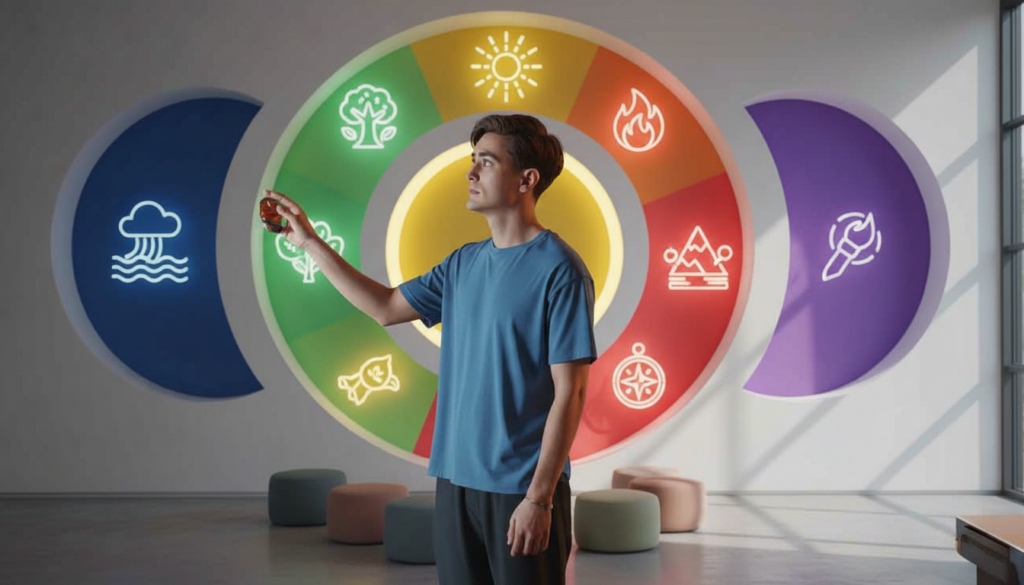
If your heart turns blue, you probably want peace and stability. Red means drive, intensity, and a love of danger. Green suggests balance, nature, and healing. Yellow means being curious and having a busy mind. People who like things that are different and deep often wear purple. Black, which you chose as your favorite color, can mean power, privacy, and quiet strength.

The trap is to treat this like a horoscope and make it fit. You don’t have “less fun” because you love beige or “less creative” because you love grey. Colors don’t have fixed meanings; they show trends.
We change too. A woman who loved hot pink when she was 18 might wake up at 35 and suddenly like terracotta and olive green instead. Our colors change as our emotional needs change over time.
To be honest, no one really does this every day. We don’t wake up and say, “My soul is teal now.” But if you look back on your life over the past few years, you might see that your clothes and home changed colors at the same time your priorities did.
Sometimes your favorite color says more about who you want to be than who you are.
- People who like blue value calm, loyalty, and stability. They don’t like drama and would rather have honest, simple relationships.
- Red fans want intensity, quick results, and to be seen. They get energy from problems, not long talks.
- Green hearts want to find balance, nature, and ways to heal emotionally. They often act as quiet peacemakers.
- Yellow souls are attracted to ideas, learning, and lightness. They can be all over the place, but they’re not boring very often.
- People who are purple want meaning and originality. They like to go deep, not wide, even with friends.
- Black devotees—keep their inner world safe. They use style as both a shield and a way to say something.
Your story is also moving when the colors change.
There is a strange time that some of us go through. You open your closet and think, “This doesn’t look like me anymore.” The colors don’t look right. Too loud, too pale, or something else.
*That quiet discomfort is often your inner self asking for a new color scheme.*
Psychologists use the terms “self-concept” and “ideal self” to describe who you are and who you want to be. Your favorite color is usually in the middle of those two. Your color preferences often change first when your life is changing quickly. You get a new job, move to a new city, get your heart broken, and then you start buying sage green pillows when you’ve sworn by black for ten years.
Noticing these changes can be a nice way to check in with yourself. If you suddenly want yellow, it could be because you’re tired of heaviness and want lightness, joy, and play. If dark colors start to feel safe, you might be setting limits or just need a break from seeing them all the time.
You don’t have to do anything. Just pay attention. Say, “What does this color give me that I don’t have right now?” You might be surprised by what you find. Remembering. People. Places you long for. Versions of yourself that you thought you had left behind.
Sometimes all it takes to say “I’m ready for softness” is to change your walls from bright white to warm beige. I don’t want everything to be sharp and bright anymore.
Psychology can show patterns, but your story is always more accurate than any study. A lilac-painted bedroom can make purple a “safe” color for life. You might never wear navy again if your school has a strict dress code. We bring our own history to every color we choose.
So the next time someone asks you, “What’s your favorite color?” don’t just say, “Oh, I don’t know.” Listen to the desire that is hidden in the word. Stability. Adventure. Be quiet. Listen up. Freedom.
You might get to know your friends better. You might see yourself. You might also feel like your favorite color has been trying to talk to you softly all along.
| Key point | Detail | Value for the reader |
|---|---|---|
| Favourite colours reflect emotional needs | We tend to choose shades that match what we seek: calm, excitement, control, balance | Helps readers understand their own drives and cravings more clearly |
| Colour preferences change with life stages | Shifts in work, relationships, or identity often bring new favourite colours | Gives readers a gentle way to track inner changes over time |
| Personal history shapes every shade | Memories, culture, and experiences can twist or reinforce common colour meanings | Encourages readers to build their own, personal colour dictionary |
Questions and Answers:
Does the color I like say something about who I am? Studies show that there are strong connections between colors and feelings, so your favorite color often shows what you value or need, even if it’s not a strict “personality type.”
Is it okay to have more than one favorite color? Yes, and that usually means you have to meet more than one need at a time, like wanting both peace (blue) and growth (green) or both privacy (black) and creativity (purple).
What if I don’t think my favorite color fits the mold? Your personal story is more important than the general trend. Your culture, memories, and past experiences can all change how you see a color.
Are online color tests useful for science? Most of them are simple and made for fun or clicks, but some are loosely based on real psychological research on how color affects mood.
Can changing the colors around me change how I feel? Yes, a lot of people say they feel calmer in blue or green spaces and more energized with touches of red or yellow. So, changing your surroundings can help you feel better every day.